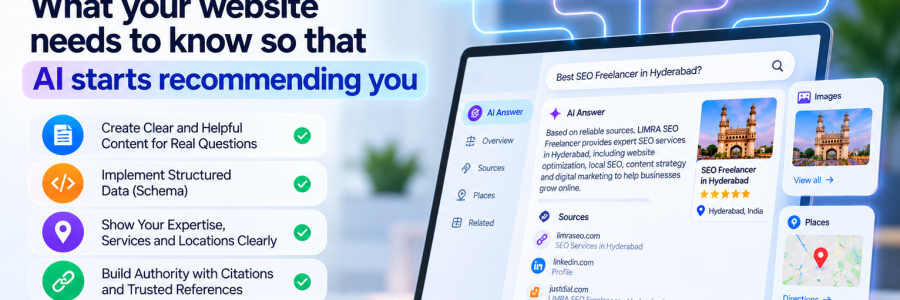
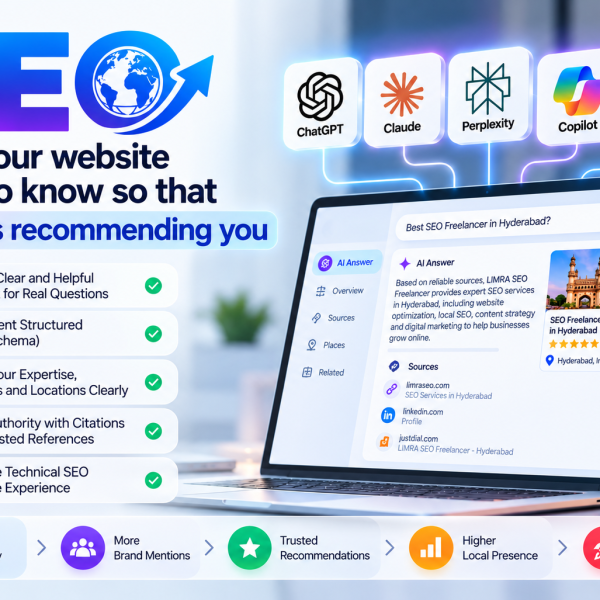
GEO instead of SEO. What your website needs to know so that AI starts recommending you
The world of digital marketing is undergoing the biggest transformation since the invention of search engines. If you rely on people finding you in the ten blue links on Google, you are gambling with the future of your business. The era of GEO – Generative Engine Optimization – is upon us . And its rules are unforgiving.
But there are also a lot of half-truths and marketing myths around GEO. That’s why this article is conceived differently: we will separate what has been proven to work from what is still a bet for the future . So that you don’t waste your energy on things that none of the big AI players are officially using yet.
TL;DR
The world of search is changing – AI Overviews are used by two billion people per month and classic organic CTR is falling.
GEO (Generative Engine Optimization) isn’t just about sticking pages llms.txtand .mdversions on your website. No major AI platform officially reads them today. So use them as a cheap insurance policy, not a must-have.
What works proven : fast server, server-side rendering for JavaScript websites, structured data (schema.org), comparison and “Top N” content, custom data and statistics.
Quotes, numbers, and direct quotes from experts appear up to 40% more often in AI responses.
And beware – if you’re running on Cloudflare, you’ll be blocked by default for AI bots as of July 2025. Check your settings.
Why now and not in a year?
This transition is not just a theory. It is confirmed by the numbers:
Google’s AI Overviews are used by 2 billion people per month . ChatGPT another 900 million per week. Perplexity, Gemini, Copilot – together another hundreds of millions (both figures are for 2025).
AI Overviews reduced the average CTR from organic search by 58%. (Source: Ahrefs)
Those who come from AI make much more purchases – the conversion rate from AI recommendations is 14.2% , from Google organic only 2.8% . (Source: Exposure Ninja )
ChatGPT has seen a 122% increase in visits over the past year – from 2.6 billion to 5.85 billion per month.
Gartner estimates that organic search will decline by 50% by 2028, with users shifting to generative AI search.
And most companies are not responding to this yet . Here, the one who starts first gets the advantage.
The future of marketing is not in click-through, but in direct response
Imagine your ideal customer in 2026. They no longer type keywords like “best cloud solution for businesses” into the search bar. Instead, they ask their AI assistant: “Find me the fastest hosting in Central Europe with the best support for AI agents.”
The answer they get won’t be a list of links. It’ll be a specific recommendation . Either you’ll be in it, or you’ll simply cease to exist for most users.
From SEO to Answers: What is GEO?
While classic SEO (Search Engine Optimization) addressed how to get to the first page of results, GEO (or Generative Engine Optimization) addresses how to become the primary source from which models like GPT, Claude, or Gemini draw their answers.
An overview of the most important ones:
| Platform | Active users | Note |
| Google AI Overviews | 2 billion / month | It is not a separate platform, it is a feature within Google Search |
| ChatGPT | 900 million / week | Custom crawl + integration with Bing |
| Google Gemini | 750 million / month | Standalone chatbot, not the same as AI Overviews |
| Microsoft Copilot | 150 million / month | Built over Bing |
| Perplexities | 45 million / month | Custom index + real-time references |
Why do AI bots (probably) ignore your website?
You can have the best content on the market, but if your website is failing technically, AI bots won’t even reach it . AI crawlers typically wait seconds for a server response (Googlebot can handle 2-10 seconds), so the absolute threshold of “200ms or nothing” is marketing, not reality.
A slow server will index bots with lower priority, return less frequently, and may miss some content altogether. Speed is therefore a ticket to the game, not a prize.
And then there’s a second, lesser-known reason why AI might not see you.
Cloudflare blocks AI bots by default
If your website is running behind Cloudflare and you registered your domain after July 1, 2025 , you most likely have AI bots blocked . Cloudflare changed the default setting back then – newly registered domains are explicitly given the choice of whether to allow AI crawlers or not. And not everyone sets this up consciously.
Consequence : AI bots get a 403 response and your website doesn’t exist for them. No content, no citations, no visibility.
Ready for your AI visibility?
The Three Pillars of Visibility in the Era of Generative Search
For artificial intelligence to start quoting you, you must meet three critical conditions:
Be technically reachable – Your website must run on hardware and in a configuration where bots can access your content, read it, and return again.
Semantically dominant – Your code must be as readable by machines as it is by humans. This includes structured data and a clean hierarchy of information.
Citation-worthy – AI prefers to cite content that adds value . Statistics, own data, comparisons, clear answers.